tanzania times : Latest News and In-depth Analysis
Contact Us
Search


The construction of Egypt’s Great Pyramid has been long debated (Picture: Getty)
For decades,experts have struggled to explain how Egypt’s Great Pyramid was built — but now a new study claims to have found an answer.
The construction would have required ancient workers to lift and place millions of huge stone (some weighing up to 15 tons) without using modern machinery,sparking countless theories.
However,a new study published in Nature suggests that a multi-channel system of ramps,built directly into the edges of the pyramid itself,could be the solution to this architectural marvel.
The paper proposes that the structure in Giza,also known as the Pyramid of Khufu,could have been built by a spiral ramp system that was covered up and hidden as each new layer was added.
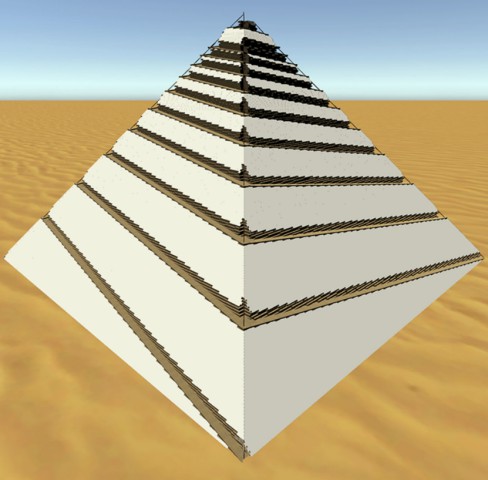
It suggests a multi-channel system of ramps was used
Not only does this new model shed light on the possible logistics behind the build,but also estimates how long the construction may have taken.
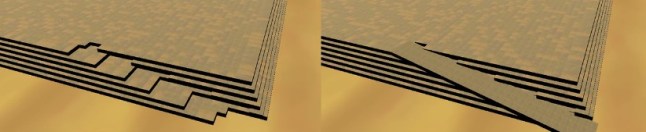 The framework could also be applied and adapted to test construction theories for other ancient structuresRoig began sketching the idea in 2020 after watching a documentary about the pyramid,moving from hand sketches to a full 3D model,simulating the construction process block by block.The theory also has merit when looking inside the pyramid. The geometry of the proposed ramp paths correspond with anomalies detected by the ScanPyramids project,which used cosmic-ray muons to reveal hidden voids within the structure.It could also explain significant wear observed at the pyramid’s corners,particularly the southeast,which may mark entry points where the greatest flow of blocks occurred and the structure was most vulnerable.
 This design would have allowed workers to move stone blocks steadily upward without constructing massive external ramps (Picture: Getty Images)The theory suggests the center of the system would be the ramp itself,acting as a gradual path built into the pyramid’s outer structure with sections of the outer stone layers being temporarily left open to form the upward path,being filled in as work progressed.Roig says that replicating ramps on all four faces of the pyramid like this would transform a single pathway into one joined-up solution.This approach is further supported by archaeological evidence from the Hatnub quarries,which show evidence that ancient Egyptians carved ramps directly into rock to distribute load,and from the Sinki pyramid,which features four ramps,one for each face.
 Structural stability was another major focus of the model (Picture: Getty Images)However,one of the most significant hurdles that any Great Pyramid construction theory needs to overcome is to explain how granite beams,weighing roughly between 50 and 80 tones,could find their way to the King’s Chamber.The study addresses this by proposing that short,reusable ramps could have been constructed on the expansive lower terraces to move these granite beams using wooden bollards for control.
Canadian military have shared details of the fire at Base Wainwright (Picture: EPA) At least four people died after a fire ripped through a Canadian military base where they were ‘throwing grenades’
Oct 20, 2026
Dakar is seeking to emerge from a financial crisis triggered by the discovery of undeclared public debt incurred by the previous administration.
Oct 15, 2026
A rare baby turtle has been discovered with two heads — and seemingly two distinct personalities.
Oct 9, 2026
Spotify is down for thousands of people (Credits: Shutterstock / Bangla press) Spotify has crashed for thousands of listeners globally both on the app and desktop versions.
Sep 30, 2026